Sunday, November 17, 2019

Visiting A Gillette Garden


          Virginia Landscape Design Consultants recently toured the Gilette gardens at the historic Virginia House in Richmond.  Although the magnificent home was built in 1927, the stone and materials came from a sixteenth century priory in England.  Alexander Weddell and his wife Virginia had the dismantled building materials shipped to Richmond to construct their “new” home.  And, the grand new home required a grand new garden.

            While overseeing the design work at a newly built college in Richmond, now the University of Richmond, renowned Boston landscape architect Charles Gillette met many people in the local area.  So when the Weddells built their home, they hired Gillette to design their gardens.  He also designed gardens for Agecroft Hall, as well as other notable Virginia homes, creating a regional style of gardens that later became known as the “Virginia Garden.”  Gillette created more than 2,500 design projects around the country in his 56-year career.


The Virginia House


Friday, April 5, 2019

Cherry Blossoms

If you can't get to Washington, D.C. to see the cherry blossoms, a trip to Lewis Ginter Botanical Gardens is a nice alternative. 


More Wildflowers in Bloom

Now is a great time for a walk in the woods.  Wooded areas, state parks and especially parks near a river are good sites for hunting wildflowers.
 
 
Shuttleworth Ginger, Hexastylis shuttleworthii, is identified by the heart shaped leaves. 


The ginger flowers are hidden beneath the leaves, a perfect invitation for crawling pollinators.


Dutchman's Breeches, Dicentra cucullaria, is in the Bleeding Heart Family

Leaves of the Putttyroot Orchid, Apelctrum hyemale. Each plant has only one leaf that is present all winter and disappears when the orchid blooms in summer, making it very difficult to find the raceme of tiny flowers.  The name was derived from a paste made from the corm which was once used to repair crockery.

Monday, March 25, 2019

Spotted Salamanders


          A friend and I recently took a walk in the woods to look for salamander eggs in the vernal pools.  In one pool we hit the jackpot...69 spotted salamander egg masses!

          Vernal pools are important habitats for various frogs, toads, salamanders and plants. You can often find a vernal pool by following the early spring sounds of frogs. These sites are unique in that they are seasonal.  They dry up after spring time.  Because they are seasonal, there are no fish in vernal pools, making them ideal nurseries for creatures that rely on them for breeding. 

          Salamanders return to the same pool where their life began when it is time to breed and reproduce.  Adults can live up to twenty or more years, usually close to the vernal pool they came from. In summer adults are usually hidden under leaf litter or logs, where they eat centipedes, worms, spiders, crickets and slugs. In winter they live underground.

Vernal pools are shallow and dry up by summer time. 


An egg mass contains about 100 eggs
 

An adult spotted salamander can reach  6 to 10 inches in length.  The spotted salamander is the official state amphibian in South Carolina and Ohio. Photo courtesy of Diane Girgente.

Sunday, March 24, 2019

Spring Ephemerals


          Spring ephemerals are the early wildflowers with a short life cycle.  They must emerge from the ground in their woodland habitat, bloom quickly and then set seed before the tree leaves emerge in the canopy above and block their access to sunlight.

          Here are a few ephemerals I found today.


Spring Beauty, Claytonia virginica


Hepatica, Hepatic acutiloba
 

Mayapple, Podophyllum peltatum, just  emerging. In a few weeks the nodding white flower will appear beneath its leaves.

Bloodroot, Sanguinaria canadensis.  The red sap in the roots was used as paint and dye by Native Americans.


Toothwort, Dentaria laciniata.  The leaves are edible.

  
A Comma butterfly is nectaring on this Saxifrage, Saxifraga virginiensis


Common Blue Violet, Viola sorois.  The seed coat contains a bit of food so ants carry the seeds to their colony, eat the food and discard the intact seed, thereby planting it.  Think "ant farming!"


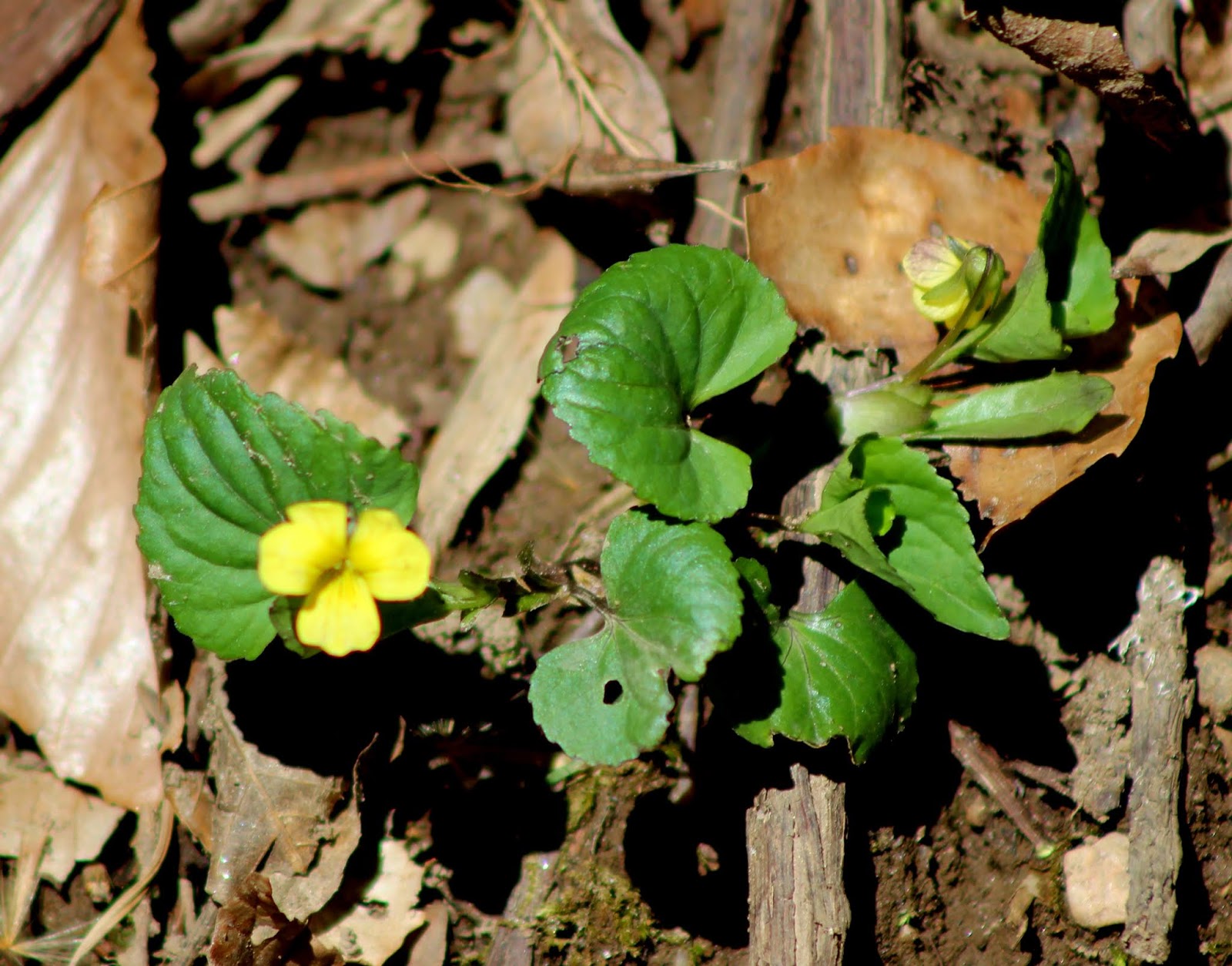
Woodland Violet, Viola pubescens.

Friday, August 24, 2018

Eastern Black Swallowtails: A New Generation


           For several years I have planted  fennel as a host plant for the Easter Black Swallowtail Butterflies to lay eggs on.  Fennel, dill, parsley and Queen Anne's Lace are the host plants that feed black swallowtail caterpillars,  so that is where the female butterfly lays her eggs.  For several years my cannas outcompeted the fennel for space in the garden so the fennel's growth was limited.  This year, however, the cannas didn't come back and the fennel grew to six feet tall.  That's when I noticed caterpillars, lots and lots of caterpillars.  In fact, there were so many caterpillars that there isn't much fennel left.


The caterpillars's job is to eat and grow until it is time to pupate.


The chrysalis, where metamorphosis takes place.


Adult Eastern Black Swallowtail -- male.
  
 
To see the Monarch Butterfly life cycle, and photos of a butterfly emerging from the chrysalis, see my post dated September 29, 2016, called Miracle of Monarchs.                                                                                   


Tuesday, July 24, 2018

Oh Those Fun Amphibians


           Most toads are nocturnal and like to hunt insects at night. These two Fowler's Toads seem to have found a shady toad abode to pass a hot summer day.


           This Grey Tree Frog chose a perfect window perch for catching insects... and apparently watching television since this is the only window I see him in at night and it is directly across from my TV.

          Frogs and toads are both amphibians.  Toads have bumpier skin than frogs.  Frogs prefer wet habitats near water while toads typically prefer dry land.  Both lay eggs in the water.  Toad eggs appear in long chains while frog eggs are in gelatinous clusters.  We have 28 species of frogs and toads in Virginia.